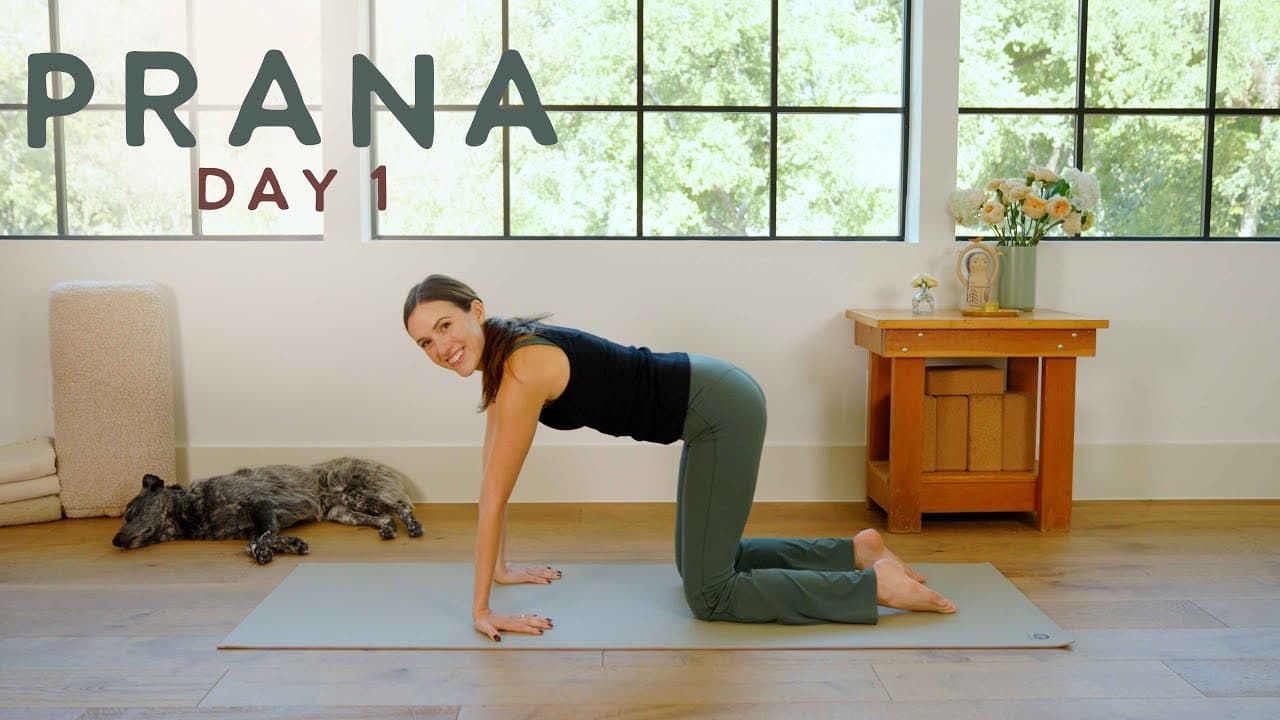
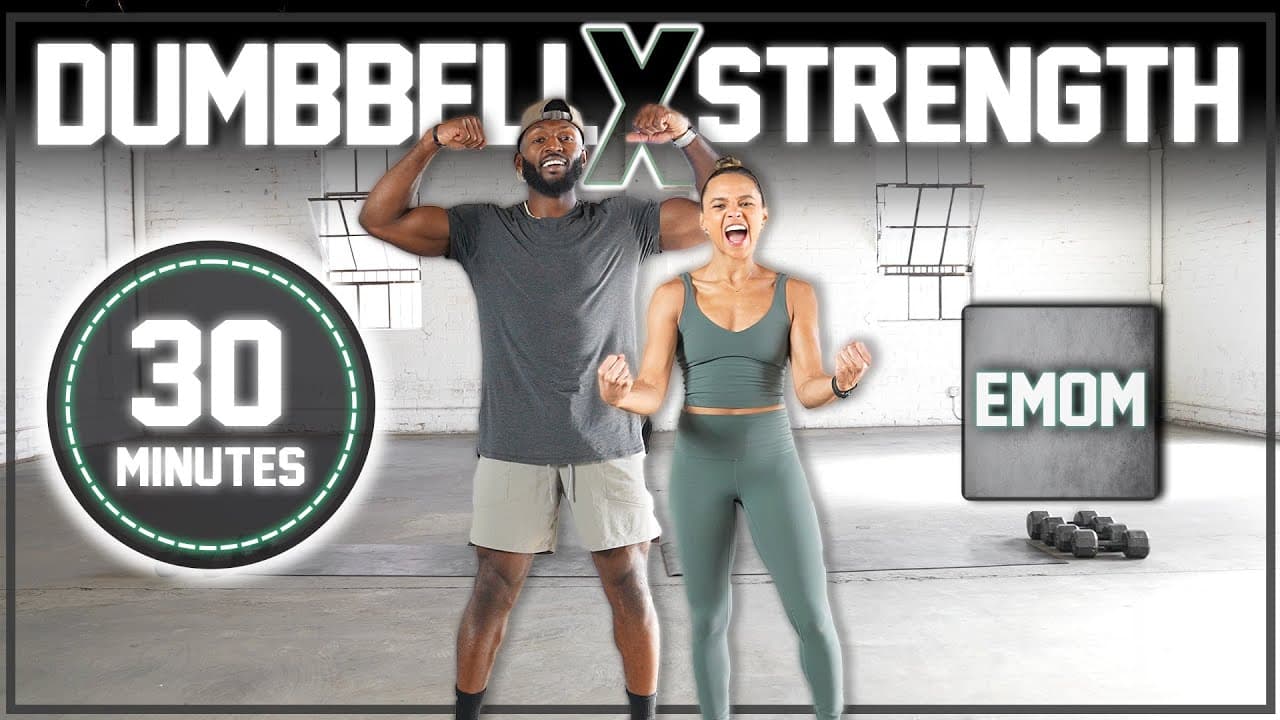
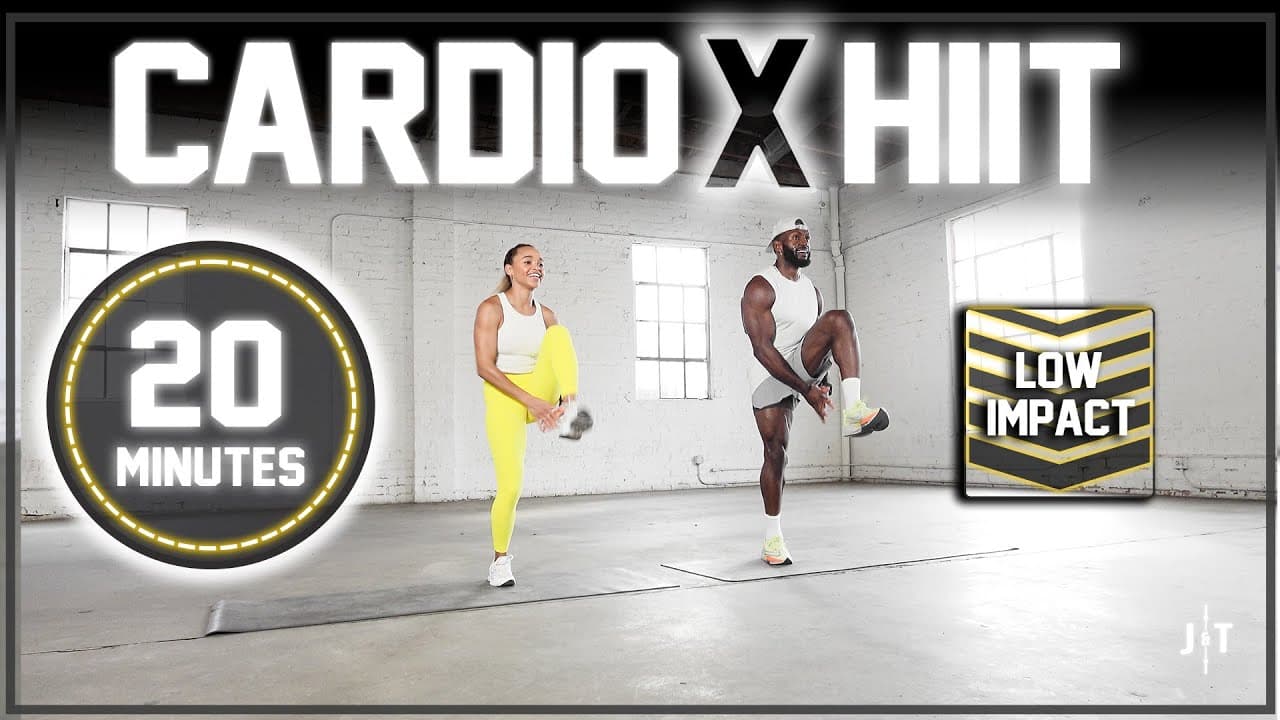
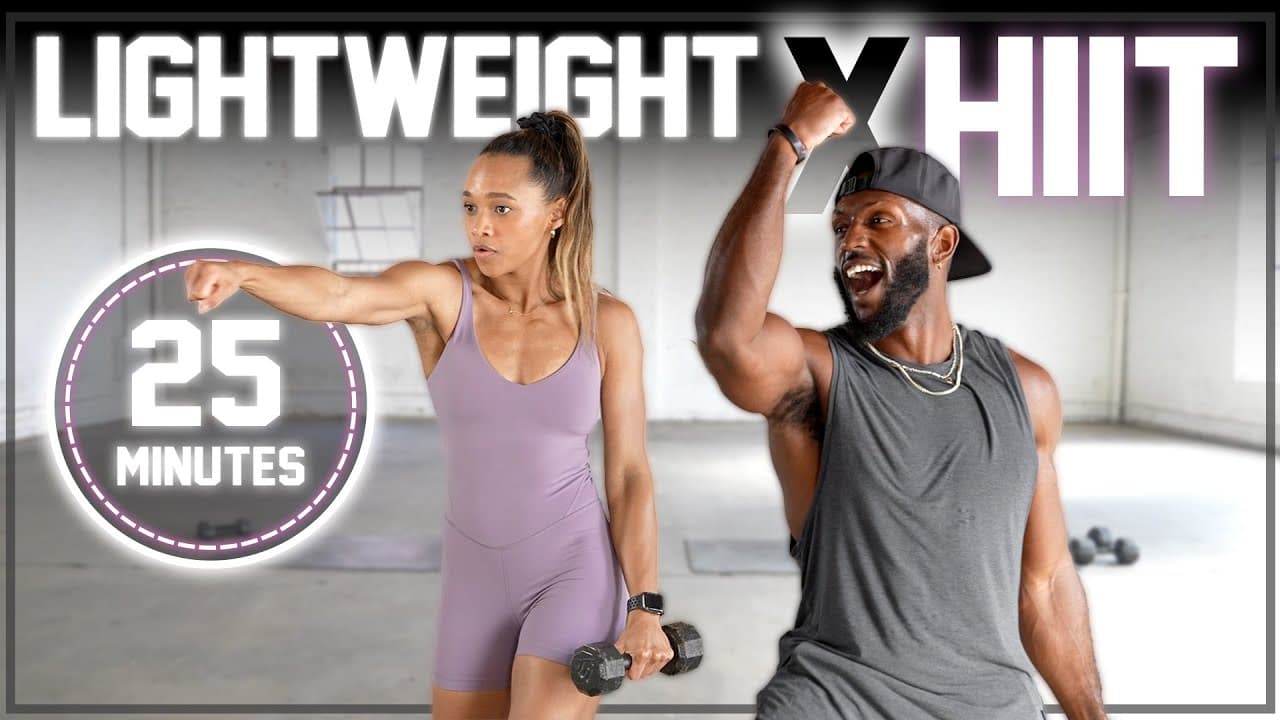
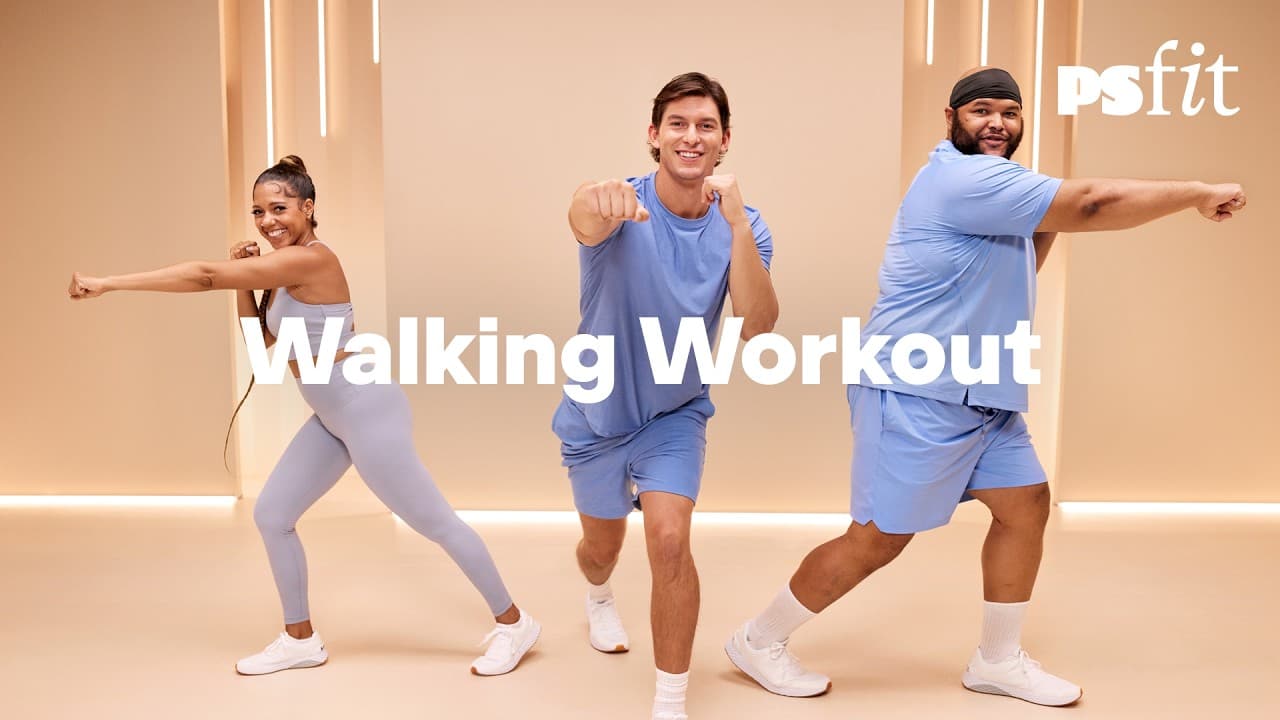
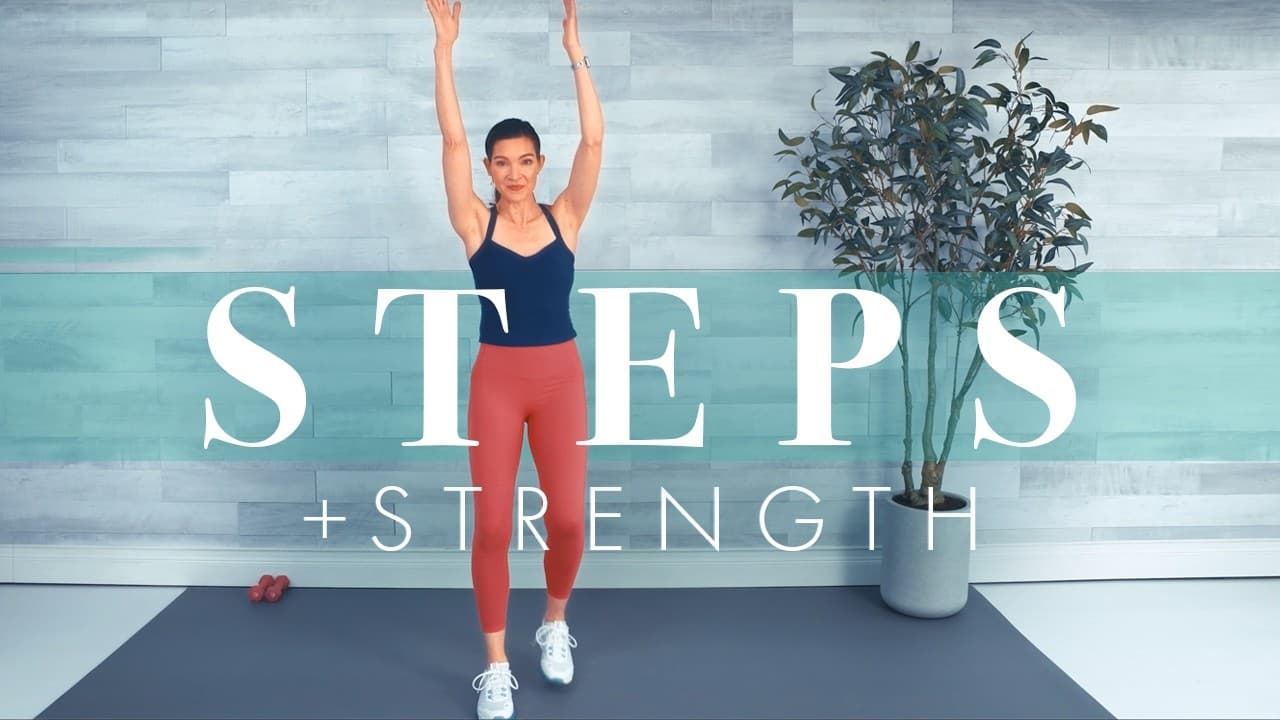
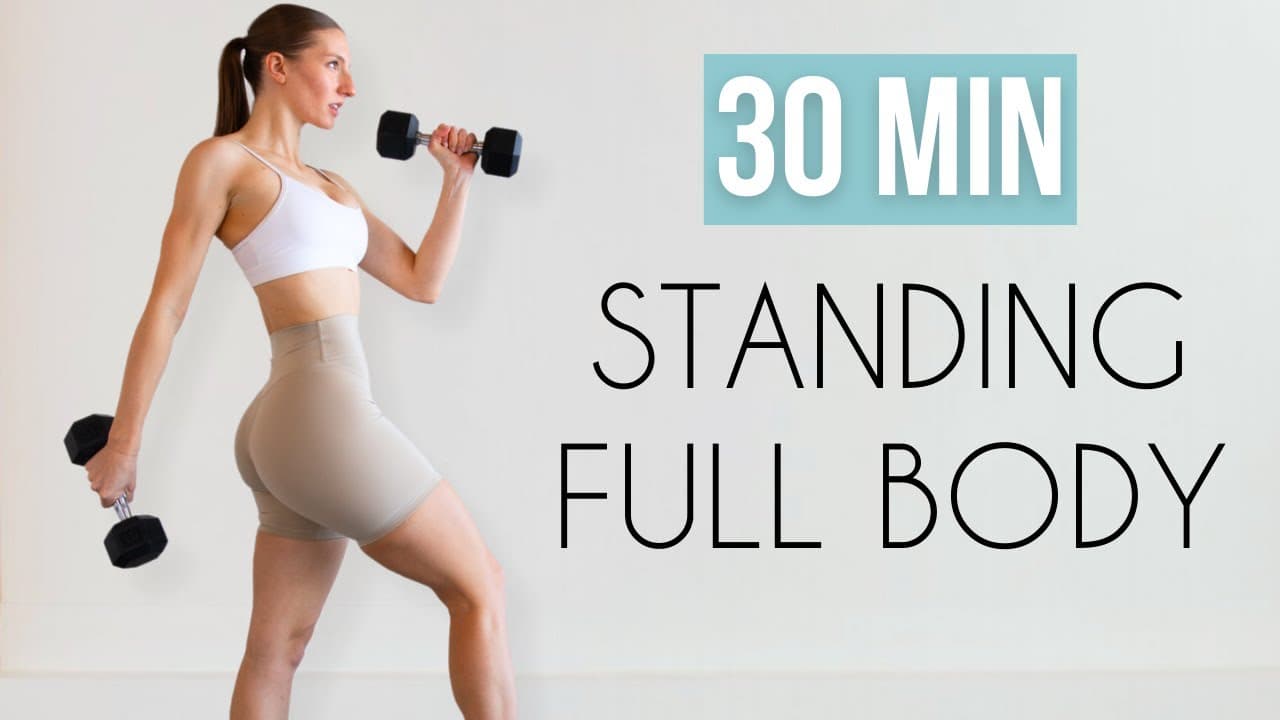
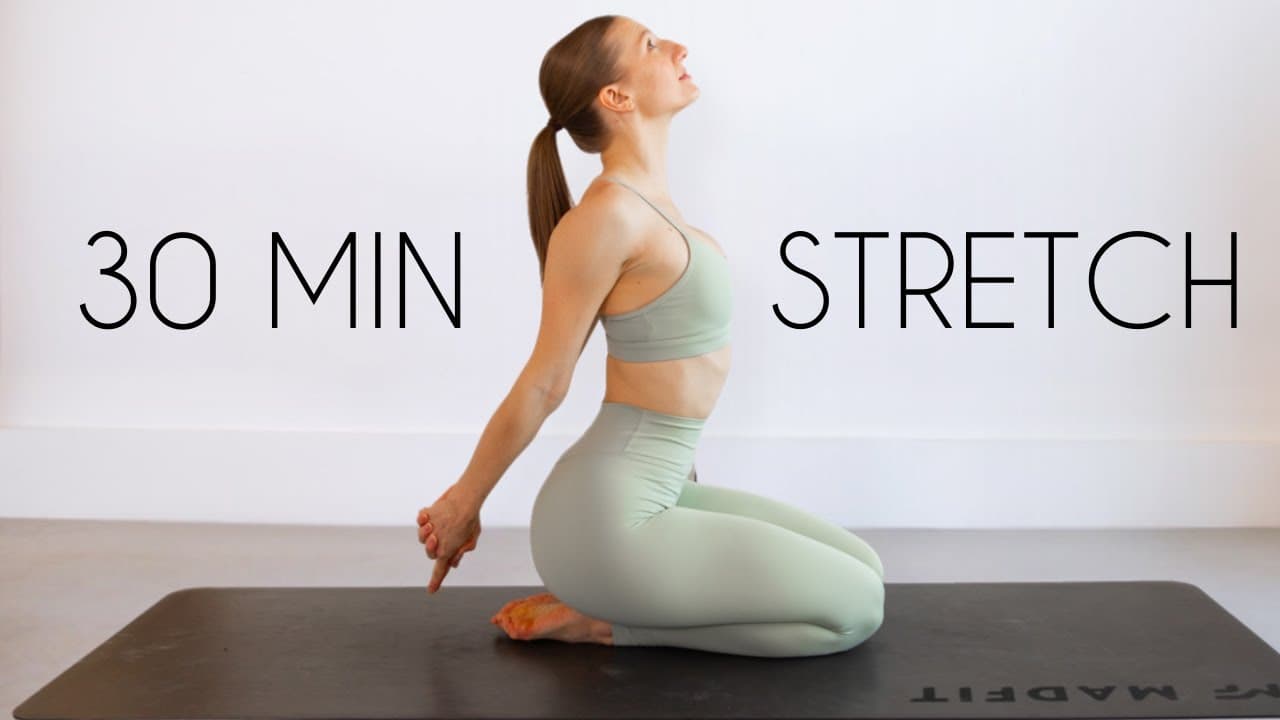
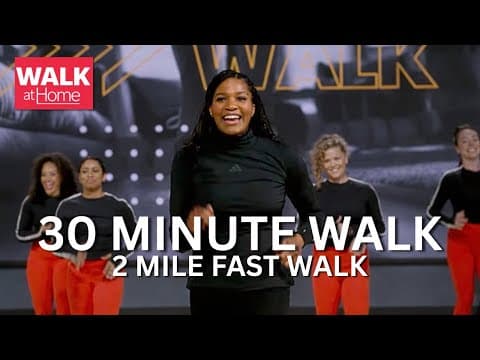
A 30 minute full body workout trains your legs, glutes, back, chest, arms and core in one session, and it still fits before work or at lunchtime. The free YouTube workouts on this page last roughly 25 to 35 minutes, for every level, with or without equipment.
Why a full body session works in 30 minutes
Training your whole body every time is the most efficient way to work out at home:
- Every muscle group gets work in every session, not just once a week.
- Many formats mix strength and cardio, so one video covers both.
- Half an hour is easy to repeat, and consistency matters more than length.
How to structure a 30 minute full body workout
If your video starts at full speed, add your own warm-up first:
- Minutes 0 to 5, warm-up: shoulder and hip circles, easy squats and marching in place.
- Minutes 5 to 25, main block: four to six exercises alternating legs, pushing, pulling and core, as a circuit or as intervals such as 40 seconds of work and 20 seconds of rest.
- Minutes 25 to 30, cool-down: slow breathing and stretches for your legs, hips, chest and back.
A simple no-equipment main block: squats, push-ups, reverse lunges, glute bridges, a plank and mountain climbers.
Choosing the right video
Each card shows the duration, level and equipment:
- Beginner: slower pace and easier options. Start here if you are returning after a break.
- Low impact: no jumping, kinder on your knees and on the neighbors below.
- Dumbbells: more strength work, often in a no-repeat format with a new move every interval.
- No equipment: bodyweight only, usually with more cardio or HIIT.
- Yoga, Pilates and walking: gentler full body options for recovery days.
A simple weekly plan
Three sessions a week with a rest day in between is a solid start:
- Monday: a dumbbell or strength-focused workout.
- Wednesday: a no-equipment or low impact HIIT session.
- Friday: repeat Monday's workout or try a different strength video.
- Other days: rest, a walk or gentle yoga.
When that feels easy, add a fourth day.
How to progress
Repeat the same videos for two or three weeks, then change one thing at a time:
- Move from the easier options to the instructor's main version.
- Use slightly heavier dumbbells or slow down each repetition.
- Shorten the rests or switch from low impact to a HIIT session with jumps.
Form and safety
Quality comes before speed: if your form breaks down, slow down or take the easier option. Wear supportive shoes and train on a non-slip surface. Stop if you feel sharp pain, dizziness or unusual shortness of breath, and check with a health professional first if you have an injury or a medical condition, or are pregnant.
Frequently asked questions
Is a 30 minute full body workout enough?
For most people, yes, as long as it is regular. Three focused sessions a week train strength and endurance across your whole body.
Should I use dumbbells or bodyweight?
Both work. Dumbbells make it easier to keep building strength, while bodyweight sessions can be done anywhere. Many people alternate the two.
Can I do a full body workout every day?
Leave a day between demanding sessions so your muscles can recover. On the days in between, choose yoga, a walk or gentle mobility work.