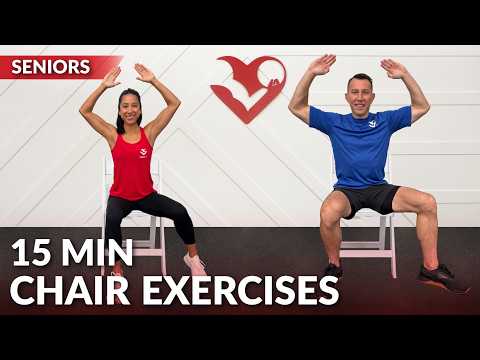








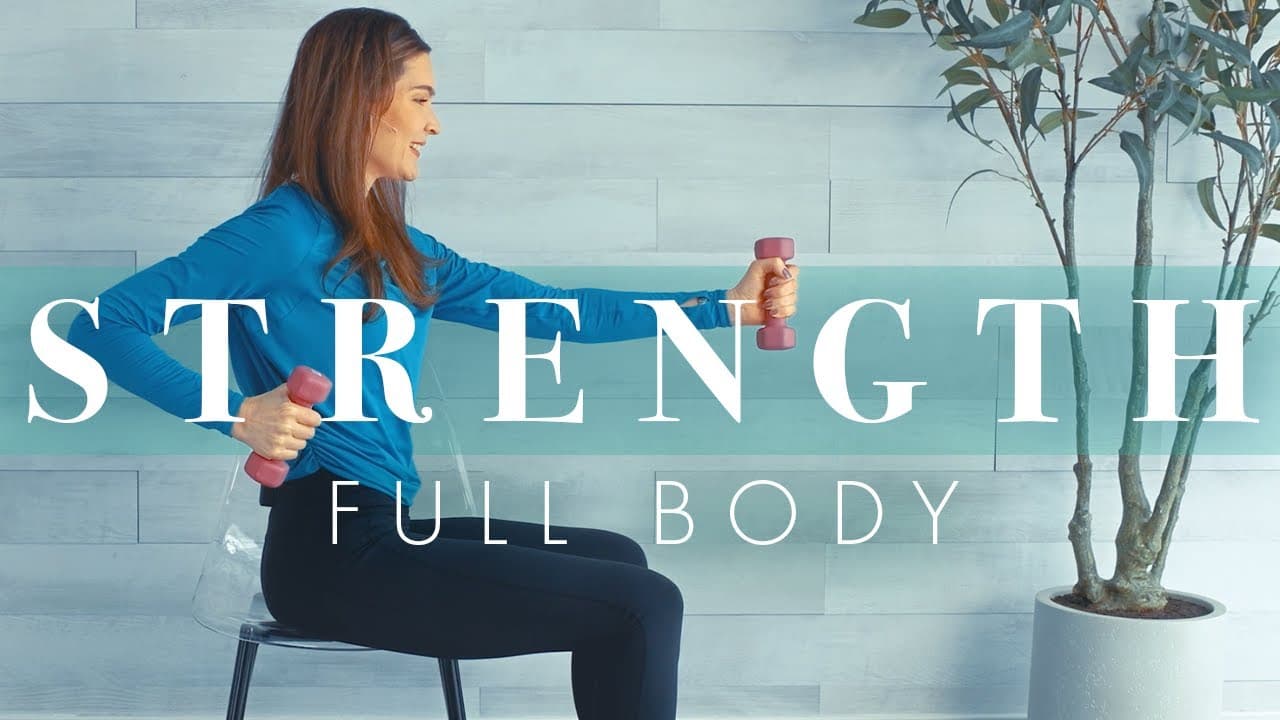





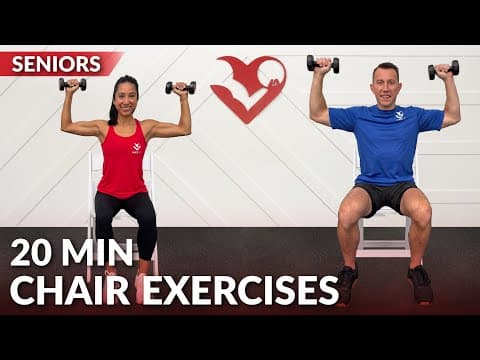




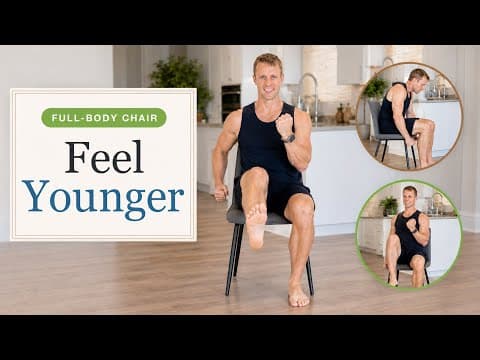

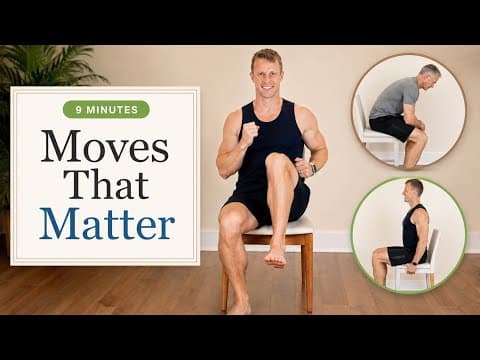

Chair exercises let you train strength, mobility and even light cardio while sitting down or holding on to a sturdy chair. They suit older adults who are getting back into exercise, feel unsteady on their feet or simply prefer a calm session at home. Every workout below uses a chair, so you never have to get down on the floor.
Why seated training works
Sitting removes most of the balance challenge, so you can focus on moving well. Chair workouts help you:
- Work your arms, legs and core with no floor work at all.
- Move your shoulders, hips, ankles and spine through a comfortable range.
- Raise your heart rate a little with marching, arm swings and punches.
- Practice everyday movements, such as standing up and sitting down with control.
Choosing a safe chair
The chair is your most important piece of equipment. Look for:
- Four sturdy legs and no wheels, ideally with the chair against a wall so it cannot slide.
- No armrests, or armrests that do not get in the way of your arms.
- A height that lets your feet rest flat on the floor with your knees at roughly a right angle.
- A firm seat: avoid sofas, soft armchairs, stools and folding chairs.
Sit on the front half of the seat, wear supportive non-slip shoes and keep water within reach.
Warm up before you start
Take about five minutes to warm up, even if the video starts straight away:
- March your feet in place for one minute while swinging your arms.
- Roll your shoulders backwards and forwards, ten times each way.
- Circle your ankles and wrists in both directions.
- Reach one arm up at a time, alternating, for thirty seconds.
A three-day weekly plan
Three sessions a week with a rest day in between, for example Monday, Wednesday and Friday, is a sensible start:
- Day 1, strength: 15 to 20 minutes of seated arm and leg exercises.
- Day 2, mobility: 10 to 20 minutes of gentle seated stretching or chair yoga.
- Day 3, cardio and balance: 15 to 20 minutes of seated marching and arm work, then a few standing moves holding the chair if you feel steady.
On other days, a short walk is plenty. To pick a video, check the length and level, then watch the first minute: the instructor should show the chair setup and offer easier options.
How to progress
Keep the same plan for two or three weeks, then change one thing at a time:
- Add a few repetitions, a couple of minutes or a slightly longer video.
- Hold a water bottle or a light dumbbell in each hand for arm exercises.
- Swap some seated moves for standing ones, holding the back of the chair.
- Practice standing up without using your hands, if it feels safe.
When to stop
Exercise should feel like effort, never like pain. Stop straight away and get medical advice before exercising again if you notice chest pain or tightness, dizziness, unusual shortness of breath, a racing or irregular heartbeat, or sharp joint pain. If you have a heart or lung condition, recent surgery or a recent fall, or are unsure whether exercise is right for you, check with your doctor before you begin.
Frequently asked questions
Are chair exercises enough on their own?
They are a great base, especially at the start. Over time, many people add standing exercises and walking when it is safe for them. Your doctor or physical therapist can help you decide when.
How long should a chair workout last?
Ten to twenty minutes is a good start. If that feels like a lot, split it into two shorter sessions.
Can I do chair exercises every day?
Gentle mobility work can be done most days. Leave a day between strength-focused sessions so your muscles can recover.